A Knowledge Worker's Guide to the Singularity
A newsletter on staying employed in knowledge work through massive technological disruption in the age of AI
Three days into playing with AI tools like Dall-E 2, Mid-Journey AI, and DaVinci, I find myself in a cold sweat. I always thought that automation would come first for the low-quality jobs. Truck driving was supposed to go first. Now I find myself taking just minutes to generate images that, just six months ago, I would have paid a graphic designer hundreds of dollars for. And it’s not just graphic design jobs at risk. OpenAI’s algorithms can write or explain code, classify data, generate statistical models, and even write academic papers in a variety of fields.
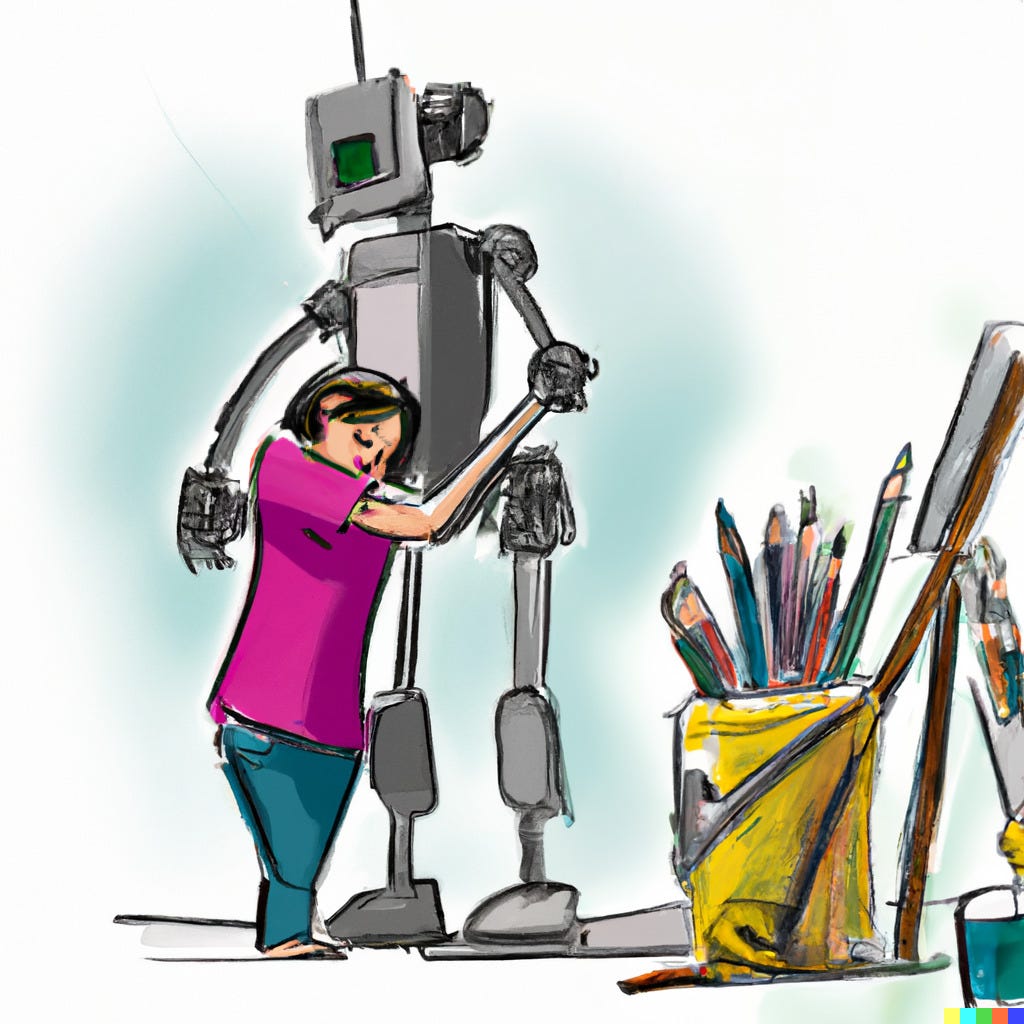
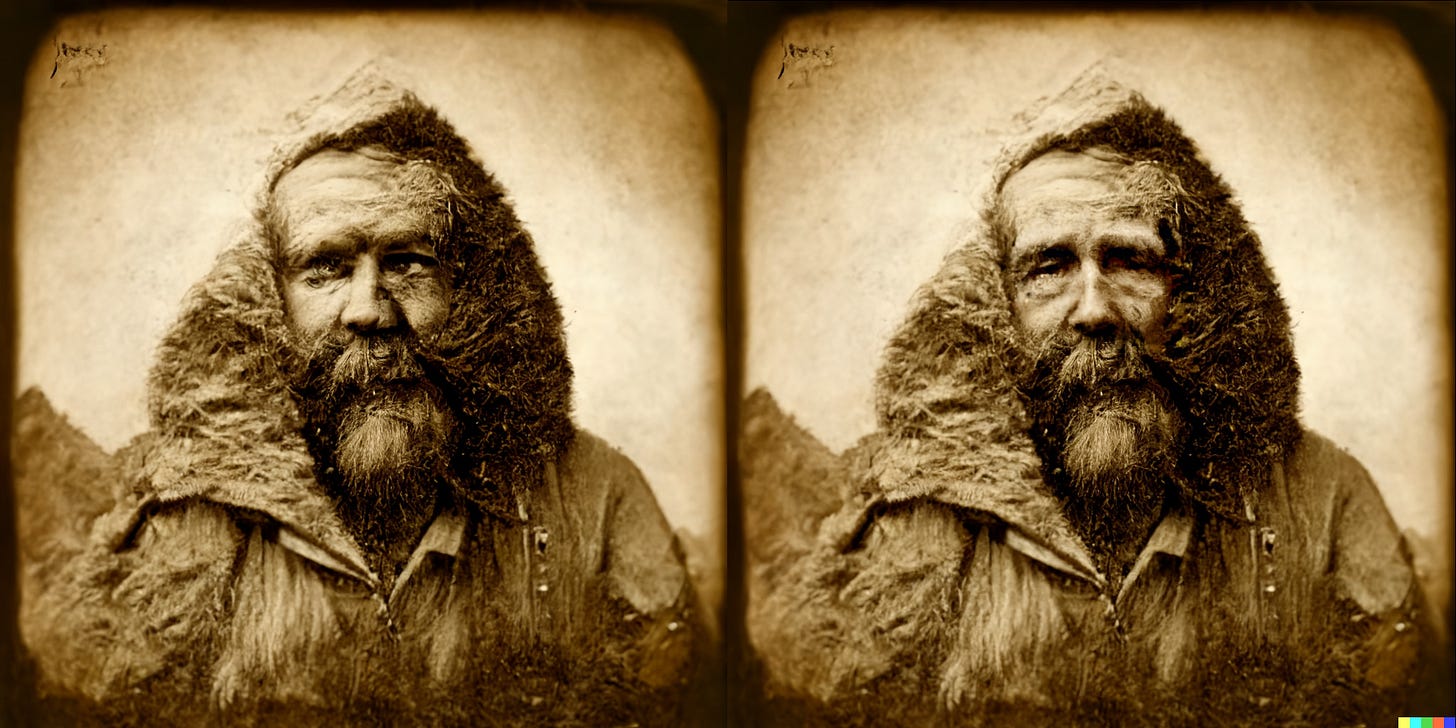
To be sure, the algorithms still have limitations. For instance, image generators Dall-E 2 and Mid Journey AI still struggle with human faces. But it’s only a matter of time until they improve. In just the last few days, I’ve seen impressive renderings of human faces from Mid Journey AI’s new test algorithm. And even without fundamental changes to the algorithms, user inputs and feedback are continually helping train the AI. Users have also found simple workarounds, such as generating an image in Mid Journey and then running it through a FaceApp filter to smooth out facial distortions or asymmetries.
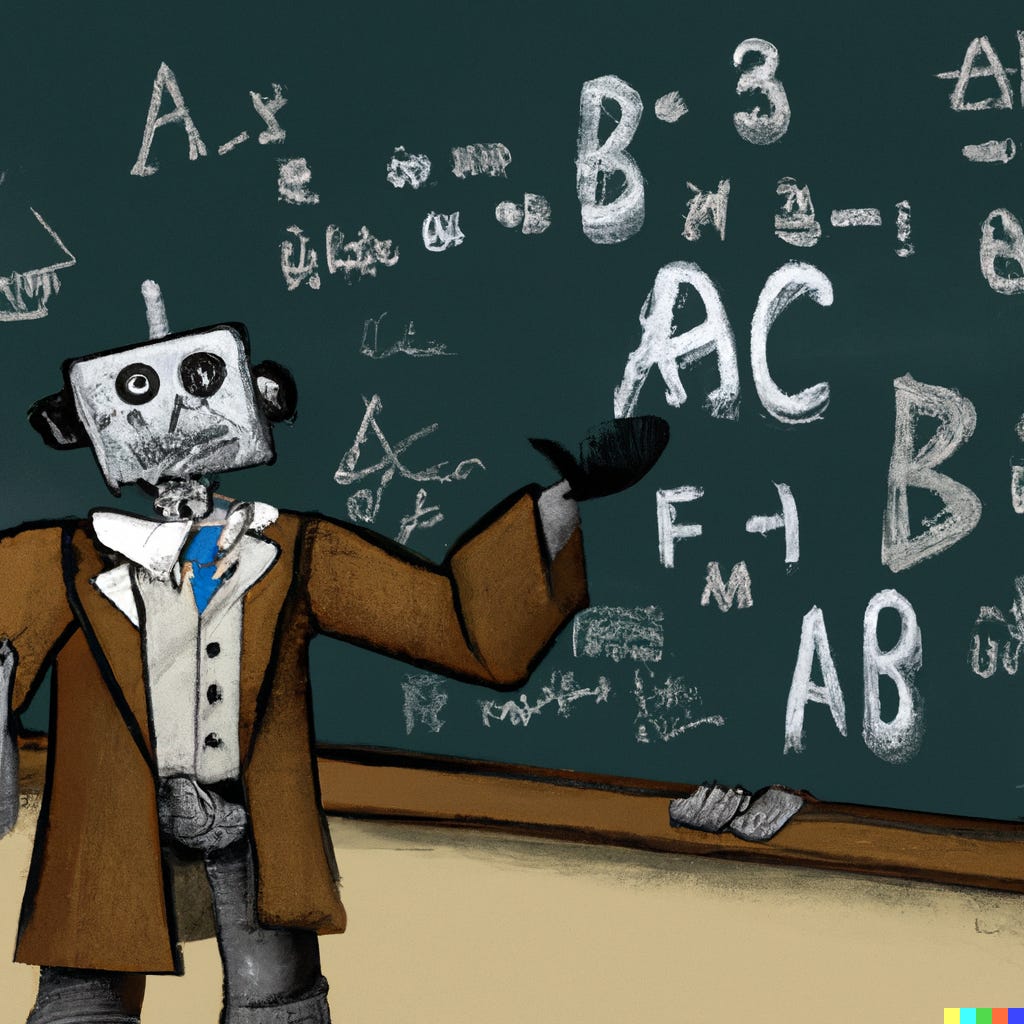
What all this amounts to is that human knowledge workers are in real danger of losing their jobs. For graphic designers and SEO or ad copy writers, the disruption has already begun. For programmers, data scientists, medical diagnosticians, educators, investigators, paralegals, and academicians, major technological disruption may be just a few years away.
But all is not lost. AI tools are finicky enough, at least for now, that not just anyone can pick them up and use them effectively. The knowledge workers who survive the Singularity—John Von Neumann’s word for the tipping point of runaway technological change—will be those who have a real mastery of how to use these AI tools and how get maximum value from them. In fact, the knowledge workers who master these tools the fastest will have an incredible “first mover” advantage—an ability to produce at 10x the rate and quality of their human competitors who haven’t yet caught on.

Thus, this newsletter. Over the next year, I plan to spend about an hour a day learning how to use the AI tools that are so rapidly becoming available. In “A Knowledge Worker’s Guide to the Singularity,” I will document my journey and share the things I learn—tips, tricks, failures, and successes. Since this could get a little pricey, there may be a Patreon or a Kickstarter at some point. And by the end of the journey, maybe I’ll write a book. But for now, it’s just you, me, and a free occasional newsletter. Hit “subscribe” to follow along!
A little about me. I am a historian religion by training, with a PhD in Religious Studies from Claremont Graduate University. I live in Albuquerque, New Mexico, where I write and research Mormon history with funding from a generous patron. I also have a professional certificate in data science, dabble in finance, and write a little fiction. You can find my website at https://christophercarrollsmith.com/.
Subscribe now